"She made Egypt laugh. She made Egypt see her. And in doing so, she made history."

A Woman Who Refused to Disappear
Before there were hashtags, before there were marches, before the word transgender had entered everyday Arabic conversation — there was Hanan El Taweel.
Born on February 12, 1966, in Sinnuris, Faiyum, Egypt, Hanan lived much of her early life carrying an identity that the world around her was not yet ready to name or celebrate. Born with a body that did not match who she was, she nonetheless found her way — through extraordinary courage — to become the first openly transgender actress in Egypt, and indeed across the Arab world.
Her story is not only a story of struggle. It is a story of belonging, artistry, and the quiet, radical act of simply being yourself in front of an audience of millions.
From Faiyum to the Big Screen
Hanan began her acting career in 1999, stepping onto Egyptian screens with a small role in Aboud Ala El Hedoud. It was a beginning — and audiences noticed her immediately. There was something magnetic about her: a warmth, a comic timing, a humanity that transcended the small size of her roles.
What followed was a brief but luminous run in some of Egypt's most beloved mainstream productions. She appeared in the stage play Hakim Oyoun alongside icons Alaa Wali Al-Din and Ahmed Helmy. She played the unforgettable Miss Inshirah — the English teacher — in the beloved 2000 comedy Al-Nazer (The Principal), a film that became a classic of Egyptian popular cinema. She played El Sett Korea in Askar fi El Moaskar (2003), delivering scenes that had audiences across Egypt roaring with laughter and, in a deeper sense, quietly accepting her.
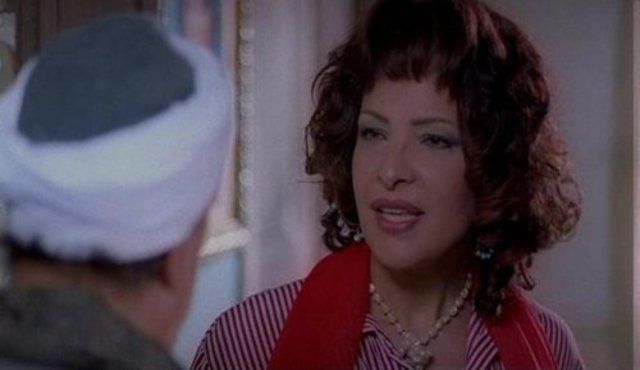
This is one of the most remarkable things about Hanan's legacy: she was loved. Mainstream Egyptian audiences watched her, laughed with her, and welcomed her into their living rooms through their television screens — often without fully knowing, or perhaps without needing to know, the full story of who she was. Her talent was undeniable, and talent has a way of dissolving boundaries.
"She was the first openly trans-Arab woman to be featured in mainstream movies, television, and theater. Her rise to fame was a milestone in the road to progress and equality."
"البيت ده طاهر وهيفضل طول عمره طاهر" — The Line That Became a Nation's Meme
If you grew up in Egypt or anywhere in the Arab diaspora, you know this line. It has been remixed, reposted, turned into ringtones, used in weddings, sent in family WhatsApp groups, and shouted across balconies for over two decades. "البيت ده طاهر وهيفضل طول عمره طاهر" — "This house is decent and will always stay decent" — delivered by Hanan as El Sett Korea in Askar fi El Moaskar, has become one of the most enduring lines in modern Egyptian popular culture.
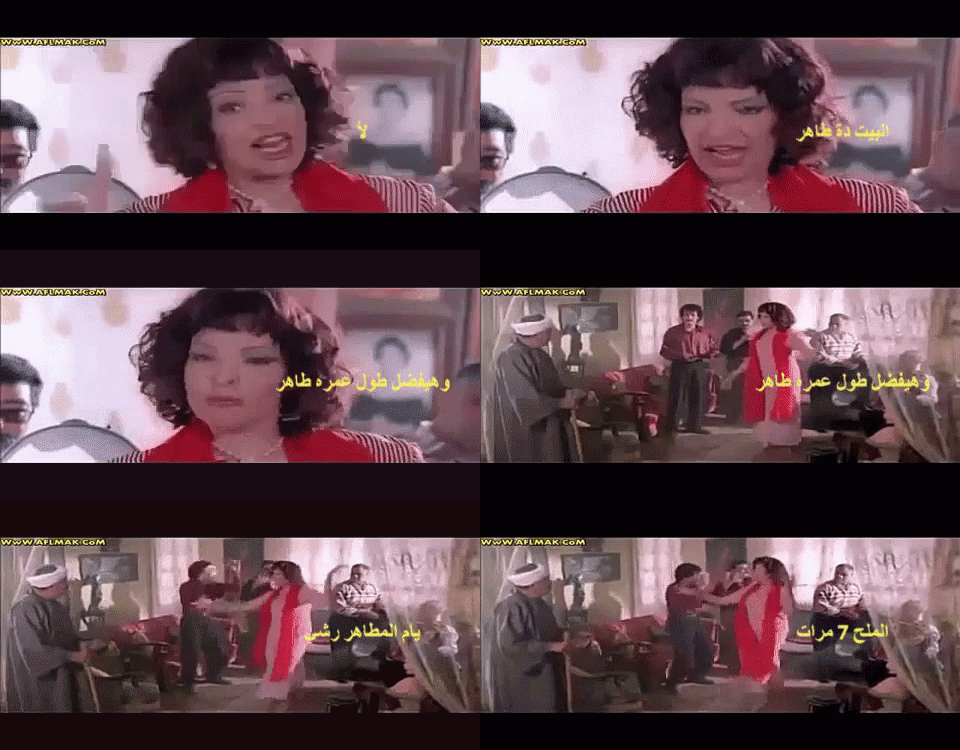
There is something profound and beautiful about this. A transgender woman delivered a line about dignity and decency — tahara, purity, honor — and Egypt adopted it as its own. It was repeated in living rooms, at family gatherings, in offices, by people who perhaps never stopped to think about who was saying it. Hanan slipped into the cultural fabric of Egypt so completely that her words became everyone's words.
That is not nothing. That is, in its own quiet and complicated way, a form of love.
Tolerance Woven Into Egyptian Culture
It would be too simple — and too dishonest — to tell Hanan's story as only a story of rejection. Yes, she faced harassment. Yes, neighbors reported her to authorities when she sought gender-affirming care. Yes, she was subjected to discrimination that eventually took a severe toll on her mental and physical health.
But the full picture of Egypt and Hanan El Taweel is more complex, and more human, than that.
Egyptian culture has always carried within it strands of deep tolerance and acceptance — a legacy of centuries of cosmopolitanism, of Alexandria's multicultural streets, of the Nile Valley's long history as a crossroads of peoples, beliefs, and identities. Egypt gave the world the concept of ma'a salama — go in peace — and that spirit of gentle coexistence has long run beneath the surface of daily life, even when official structures have failed to protect it.
The Egyptian film industry — one of the Arab world's most powerful cultural institutions — gave Hanan a platform. Directors cast her. Producers worked with her. Co-stars, including some of the biggest names in Egyptian comedy, shared the stage with her. The audience loved her. This was not nothing. This was, in its own quiet way, a form of acceptance that spoke louder than any policy or law.
In the Egyptian cultural tradition of muwasha and the ancient performance arts, gender fluidity and cross-expression have deep roots. Historians and cultural scholars have noted that spaces of performance, celebration, and collective gathering have often been sites of greater freedom in the Arab world — places where the full humanity of a person could be witnessed and received.
Hanan El Taweel walked into that space. And Egypt, for a shining moment, opened its arms.
A Tragedy That Must Be Named
Hanan died on December 1, 2004, at the age of 38. The circumstances of her death remain painful and contested. After neighbors filed a complaint against her following her decision to pursue gender-affirming surgery, she was admitted to the Abbasiya Psychiatric Hospital. She died there, and the exact cause has never been fully clarified — with accounts varying between suicide, heart failure, and the traumatic effects of forced electroconvulsive procedures.
What is clear is that the systems that should have protected her failed her. The harassment she endured, the forced hospitalization, the stigma — these were not inevitable. They were the product of structures that have still not fully reckoned with the humanity of transgender people in Egypt and across the region.
Her story was later documented by No Hate Egypt, an Egyptian LGBTQ advocacy group, whose tribute video went viral and introduced a new generation to the woman behind Miss Inshirah — the full, complex, courageous human being she truly was.
Why We Remember Her at Habibi Shik Shok
At Habibi Shik Shok, our mission is to safeguard culture through art, movement, and connection. That mission is incomplete — it is hollow — if it does not include the stories of those who were pushed to the margins of the very culture they helped shape.
Hanan El Taweel was a SWANA artist. She was Egyptian. She was a comedian, a performer, a woman of extraordinary presence. And she was transgender — a fact that does not diminish any of those other truths, but deepens them.
The contemporary SWANA cultural space that Habibi Shik Shok is building — through Heshk Beshk and beyond — is one where all of these identities are welcome. Where the full diversity of our community is not just tolerated but celebrated. Where we look to figures like Hanan and say: you were always part of this. You always will be.
Egypt has never been a monolith. Its culture has always been richer, stranger, more generous, and more human than any single narrative can contain. Hanan El Taweel is proof of that. She made Egypt laugh. She made Egypt see her. And in doing so, she quietly expanded what Egypt understood about itself.
That is a legacy worth protecting. That is a legacy worth dancing for.
حنان الطويل — February 12, 1966 – December 1, 2004
Rest in power. 🤍